

 Facebook
 X
X
 Pinterest
 Copy Link
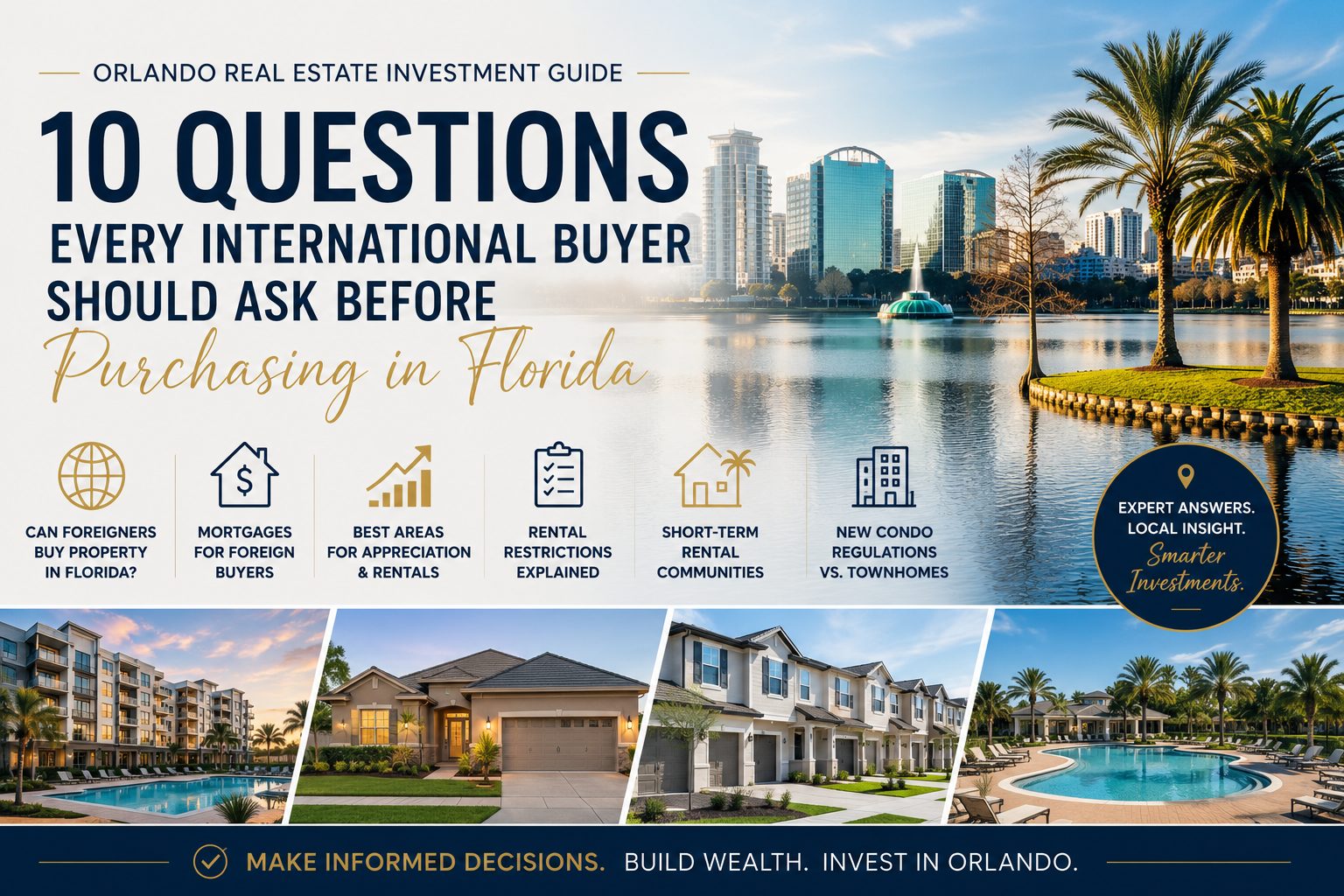
Orlando Real Estate Investment Guide 2026: 10 Questions Every International Buyer Should Ask Before Purchasing in Florida
Orlando has long been one of the most attractive real estate markets in the United States, drawing buyers from around the world. With its growing population, strong job market, world-renowned attractions, and no state income tax, Central Florida offers opportunities for investors seeking long-term growth, rental income, or a vacation home.
If you’re considering purchasing property in Orlando from abroad, you likely have several questions. Here are the answers to the ones I hear most often.
1. Is Orlando Still a Good Real Estate Investment?
In many ways, yes.
Orlando continues to experience steady population growth as people relocate for employment, education, retirement, and lifestyle. While tourism plays an important role in the local economy, the region is also supported by thriving healthcare, technology, aerospace, education, and logistics industries.
This diversified economy creates consistent demand for housing, making Orlando an attractive market for both homeowners and renters.
However, every investment is unique. The best property for you depends on your financial goals, whether you’re looking for appreciation, rental income, or a combination of both.
2. Which Areas Have the Highest Appreciation?
Although no one can guarantee future appreciation, several Central Florida communities have demonstrated strong growth over the years.
Some of the areas worth considering include:
- Winter Garden – Popular with families thanks to its charming downtown, excellent schools, and continued growth.
- Horizon West – One of the fastest-growing master-planned communities in Florida.
- Lake Nona – Known for Medical City, innovation, and modern residential developments.
- Winter Park – An established, highly desirable community with enduring value.
- Oviedo, Sanford, and Clermont – Growing markets with expanding infrastructure and increasing buyer demand.
When evaluating appreciation potential, look beyond today’s prices. Communities with strong employment, good schools, transportation improvements, and ongoing development often perform well over the long term.
3. Can Foreigners Buy Property in Florida?
Absolutely.
You do not need to be a U.S. citizen or permanent resident to purchase real estate in Florida. International buyers can own investment properties, vacation homes, or personal residences.
Today’s technology also makes the process much easier. Many transactions can be completed remotely through secure electronic signatures, virtual meetings, and online document sharing.
4. Can Foreigners Get a Mortgage?
Yes.
Many U.S. lenders offer financing programs specifically for foreign nationals.
These loans typically require:
- A larger down payment
- Proof of income and assets
- Identification from your home country
- Additional financial documentation
Because every lender has different requirements, it’s important to work with a mortgage professional experienced in international financing. Getting pre-approved early helps you understand your purchasing power before you begin your property search.
5. What Are Rental Restrictions?
This is one of the most important questions every investor should ask before making an offer.
Rental restrictions vary from one community to another. Some homeowners associations prohibit short-term rentals entirely, while others require minimum lease terms of six months or one year. Certain communities also limit the number of rental properties allowed.
In addition to HOA rules, city and county regulations may affect how a property can be rented.
Before purchasing, always review the HOA documents and verify local regulations to ensure the property supports your investment strategy.
6. Which Communities Allow Short-Term Rentals?
If you’re planning to generate income through vacation rentals, choosing the right community is essential.
Several resort-style communities near Walt Disney World were designed with short-term rentals in mind and offer amenities such as:
- Resort-style pools
- Clubhouses
- Fitness centers
- Water parks
- Gated entrances
- On-site property management
Keep in mind that rental regulations can change. Before purchasing any property, verify both HOA rules and local ordinances to confirm that short-term rentals are currently permitted.
7. What Are the Best Areas for Long-Term Rentals?
Long-term rental demand is strongest in areas with growing employment, excellent schools, hospitals, and convenient access to major highways.
Some of the most popular areas include:
- Lake Nona
- Winter Garden
- Horizon West
- Oviedo
- Sanford
- Altamonte Springs
- Clermont
These communities consistently attract professionals, families, healthcare workers, and students looking for stable, long-term housing.
8. What Return Can I Expect?
This is one of the most common questions I receive, but there isn’t a one-size-fits-all answer.
Your return depends on several factors, including:
- Purchase price
- Financing terms
- Rental income
- Property taxes
- Insurance costs
- HOA fees
- Maintenance expenses
- Property management fees
- Vacancy rates
Some investors focus on monthly cash flow, while others prioritize long-term appreciation. The strongest investments often provide a healthy balance of both.
Before purchasing, it’s important to evaluate the property’s projected income and expenses carefully to ensure it aligns with your financial goals.
9. Should I Buy a Condo or a Single-Family Home?
The answer depends on your investment objectives.
A condominium may require less exterior maintenance because the homeowners association typically handles the building and common areas. However, condos often have higher HOA fees and may have stricter rental policies.
A single-family home generally offers more privacy, greater flexibility, and historically strong appreciation in many Central Florida neighborhoods. While maintenance responsibilities are greater, owners also have more control over the property.
There isn’t a universal “better” choice—only the option that best supports your investment strategy.
10. Condo vs. Townhome: Understanding Florida’s New Regulations
One of the biggest changes affecting Florida real estate over the past few years has been the implementation of new condominium safety laws following the tragic Surfside condominium collapse.
If you’re considering purchasing a condominium, it’s important to understand how these regulations may affect both your monthly ownership costs and your long-term investment.
What Changed?
Florida now requires many condominium associations for buildings three stories or taller to complete regular Structural Integrity Reserve Studies (SIRS) and maintain adequate reserve funds for major structural components such as the roof, foundation, load-bearing walls, plumbing, electrical systems, windows, waterproofing, and other critical building elements. Associations generally can no longer waive funding for these structural reserves, helping ensure buildings are properly maintained for the future.
What Does This Mean for Buyers?
If you’re purchasing a condo—especially in an older building—it’s essential to look beyond the purchase price.
Ask questions such as:
- Has the association completed its Structural Integrity Reserve Study?
- Are there any upcoming special assessments?
- Are reserve accounts adequately funded?
- Have major repairs already been completed?
- How have HOA fees changed over the past few years?
A condo with a lower purchase price could ultimately cost more if the association faces significant repairs or underfunded reserves.
How Are Townhomes Different?
Many buyers assume condos and townhomes are the same, but legally they’re often very different.
With a townhome, you typically own both the home and the land beneath it. Depending on the community, the homeowners association may maintain only the common areas, while you are responsible for your own roof and exterior—or the HOA may maintain certain exterior components. Responsibilities vary by community, so it’s important to review the governing documents before purchasing.
Most townhome communities are not subject to the same structural reserve requirements that apply to many multi-story condominium buildings, although they still maintain reserve funds for common property and follow their own HOA budgets and governing documents.
Which Is the Better Investment?
There isn’t a one-size-fits-all answer.
A condominium may offer lower maintenance responsibilities and attractive amenities, making it appealing for seasonal residents or investors seeking a lock-and-leave lifestyle.
A townhome often provides more ownership flexibility, potentially lower association fees in some communities, and fewer concerns related to the newer condominium reserve requirements. However, maintenance responsibilities can be greater depending on the community.
Rather than choosing one property type over another, I encourage my clients to evaluate the entire picture—including HOA finances, reserve studies, insurance costs, maintenance responsibilities, rental restrictions, and long-term investment goals.
A well-managed condo can be an excellent investment, just as a poorly managed townhome community can present challenges. Careful due diligence is the key to making a smart purchase.
Final Thoughts
Central Florida continues to attract investors from around the world for good reason. A growing population, diverse economy, and strong demand for housing make Orlando an appealing market for many types of real estate investments.
Whether you’re purchasing your first investment property, searching for a vacation home, or expanding your portfolio, taking the time to understand financing options, rental regulations, and local market trends can help you make informed decisions with confidence.
If you’re considering investing in Orlando or anywhere in Central Florida, I’d be happy to help you evaluate your options, answer your questions, and guide you through every step of the process.
Ready to explore your investment opportunities in Central Florida? Let’s connect and find the property that best fits your goals.
